
-
Enzo Bonafe - Style 3403 Mod. Chukka Boot - Snuff Waxy Kudu
Vendor:Enzo BonafèNorwegian WeltedRegular price $800.00 USDRegular price -
Enzo Bonafe - Style 4076 Urban Commando Derby Boot - 8230 Mahogany Scotchgrain
Vendor:Enzo BonafèNorwegian WeltedRegular price $750.00 USDRegular price$875.00 USDSale price $750.00 USDSale -
Enzo Bonafe - Style 4076 Urban Commando Derby Boot - 6120 Brown Scotchgrain
Vendor:Enzo BonafèNorwegian WeltedRegular price $750.00 USDRegular price$875.00 USDSale price $750.00 USDSale -
Enzo Bonafe - Style 3722 Chukka Boot - Saddle Brown Hatchgrain
Vendor:Enzo BonafèNorwegian WeltedRegular price $800.00 USDRegular price -
Romanoff-X - Whole Cut Oxford - Antique Tan
Vendor:BlkbrdNorwegian WeltedRegular price $245.00 USDRegular price$245.00 USDSale price $245.00 USD


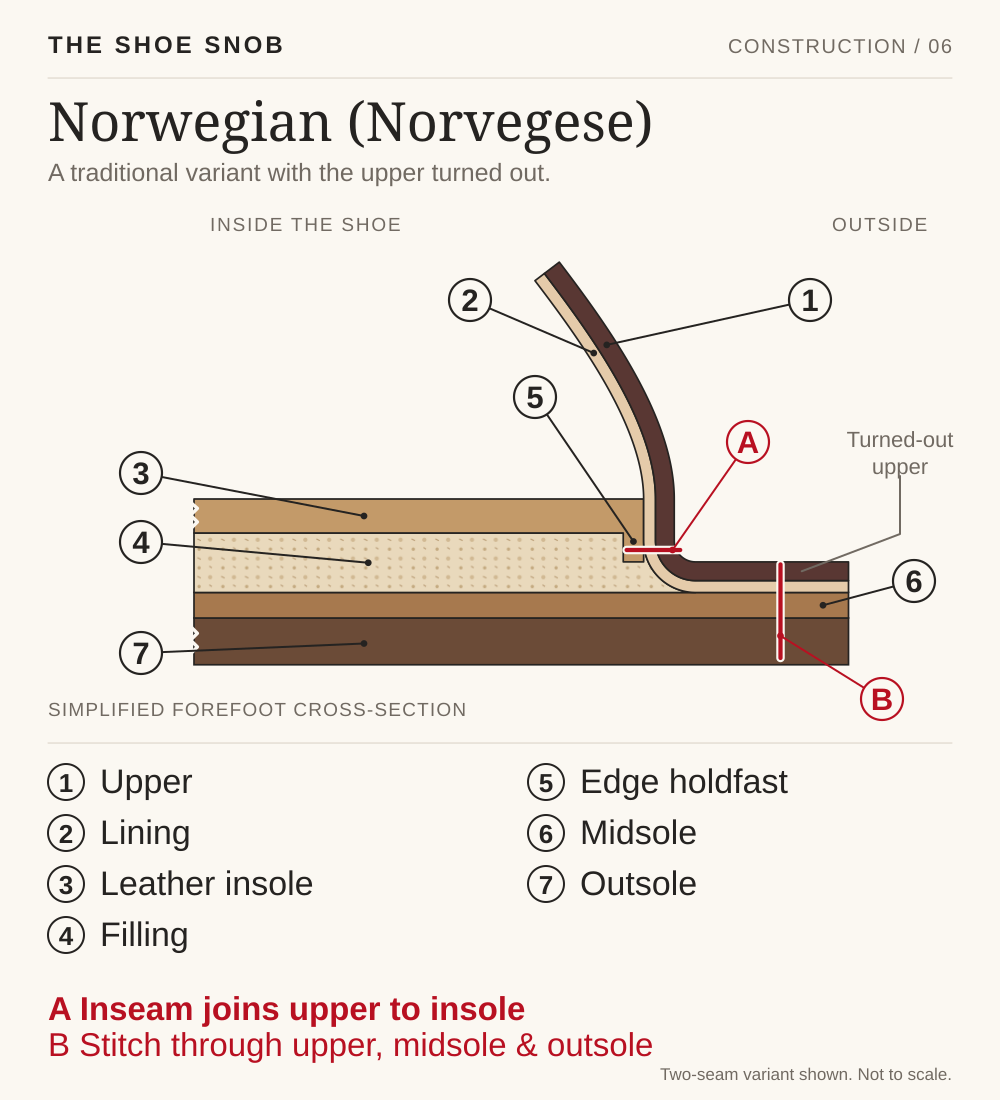
Understanding Norwegian Construction
Norwegian construction, often called Norvegese, brings the structural stitching out around the side of the shoe. In the traditional two-seam version shown here, one seam joins the upper to the insole, while further stitching connects the turned-out upper to the sole structure. Makers use different arrangements, so there is more than one way to build a Norwegian shoe.
The method has a history in footwear made for wet conditions, but today it is also chosen for the character of the stitching. Linear stitches give a cleaner border; chained stitches make a much bolder feature of the sole edge. You can see both approaches in the Enzo Bonafe models in this collection.
The extra stitching and substantial bottom can bring weight and stiffness as well as visual presence. I would choose it because you enjoy that combination, rather than assuming the most elaborate seam must be the best construction for every occasion.

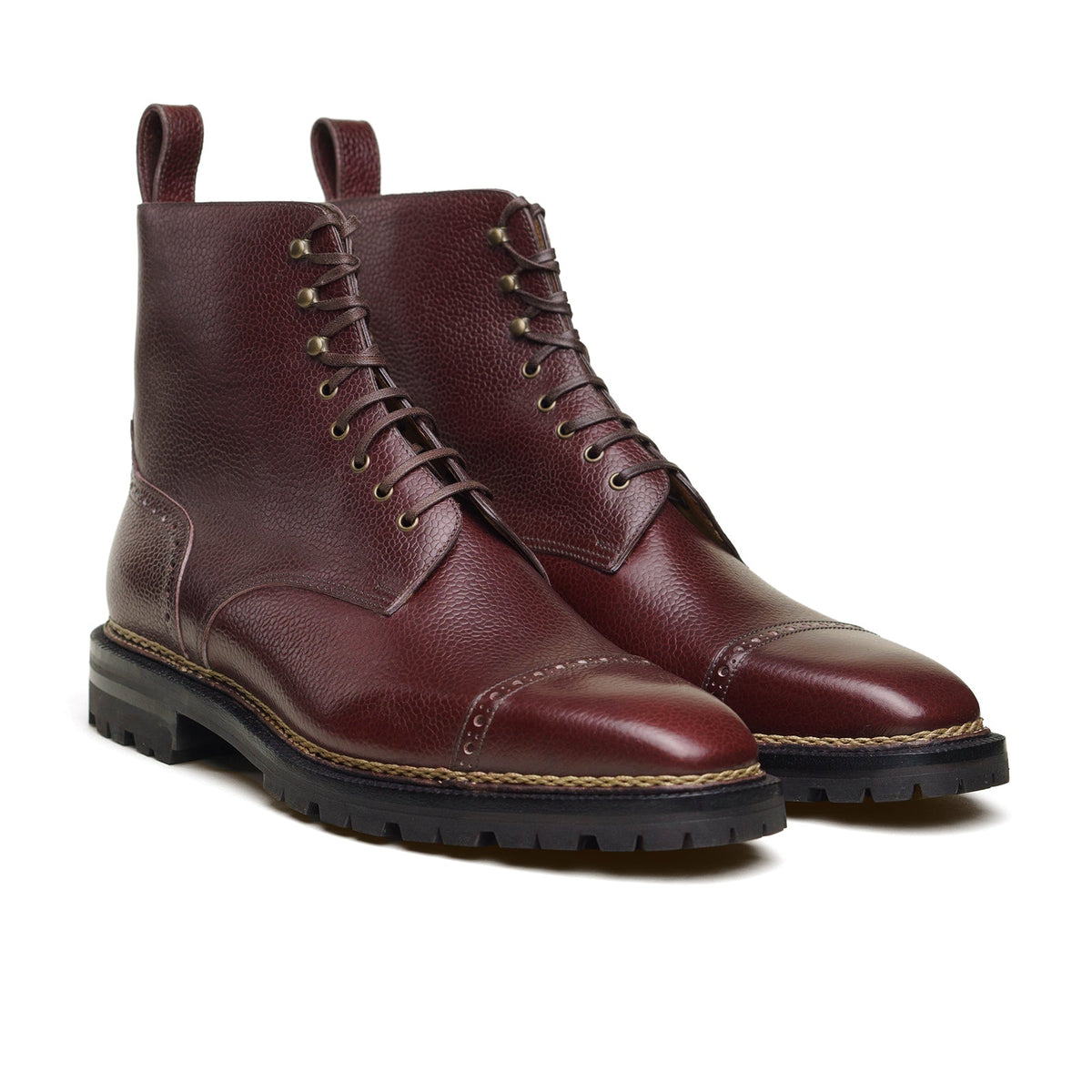
Read The Construction, Not Just The Name
A Norwegian split-toe describes the design of an upper, not how its sole is attached. A split-toe shoe can be Goodyear welted, Blake stitched or made another way. Likewise, decorative chain stitching alone does not prove that a shoe uses Norwegian construction.
A raised storm welt is another detail that is often confused with it. A Goodyear shoe can have a storm welt without becoming a Norwegian shoe. Check the maker's specification, and do not take either label as a promise that water cannot get in. The products here are grouped by their stated construction.
For the wider comparison, read my full guide to shoe construction on The Shoe Snob Blog.
