
-
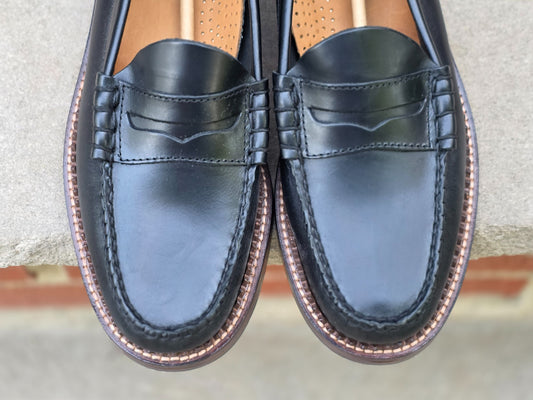
G.H. Bass - Penny Loafers - Black Leather - US 7.5
Vendor:The Shoe Snob Shop - SamplesBlake StitchedRegular price $95.00 USDRegular price$395.00 USDSale price $95.00 USDSale -
Enzo Bonafe - Chiseled Toe Penny Loafer - Tobacco Calf
Vendor:Enzo BonafèBlake StitchedRegular price $625.00 USDRegular price$0.00 USDSale price $625.00 USD -
Enzo Bonafe - 3 Eyelet Wholecut Oxford - Greyish Black Calf
Vendor:Enzo BonafèBlake StitchedRegular price $625.00 USDRegular price$0.00 USDSale price $625.00 USD -
Enzo Bonafe - 3 Eyelet Wholecut Oxford - Tobacco Calf
Vendor:Enzo BonafèBlake StitchedRegular price $625.00 USDRegular price$0.00 USDSale price $625.00 USD -
Enzo Bonafe - 3 Eyelet Wholecut Oxford - Dark Blue Calf
Vendor:Enzo BonafèBlake StitchedRegular price $600.00 USDRegular price$0.00 USDSale price $600.00 USD -
Enzo Bonafe - Chiseled Toe Penny Loafer - Burgundy Calf
Vendor:Enzo BonafèBlake StitchedRegular price $600.00 USDRegular price$0.00 USDSale price $600.00 USD -
Oro Los Angeles - Suede Jodhpur Boots - Ash Grey - US 7
Vendor:The Shoe Snob Shop - SamplesBlake StitchedRegular price $195.00 USDRegular price$440.00 USDSale price $195.00 USDSale -
In Corio - Derby Boots - Black Grain - US 7.5
Vendor:The Shoe Snob Shop - SamplesBlake StitchedRegular price $195.00 USDRegular price$330.00 USDSale price $195.00 USDSale



Why Blake Can Be Cut So Close
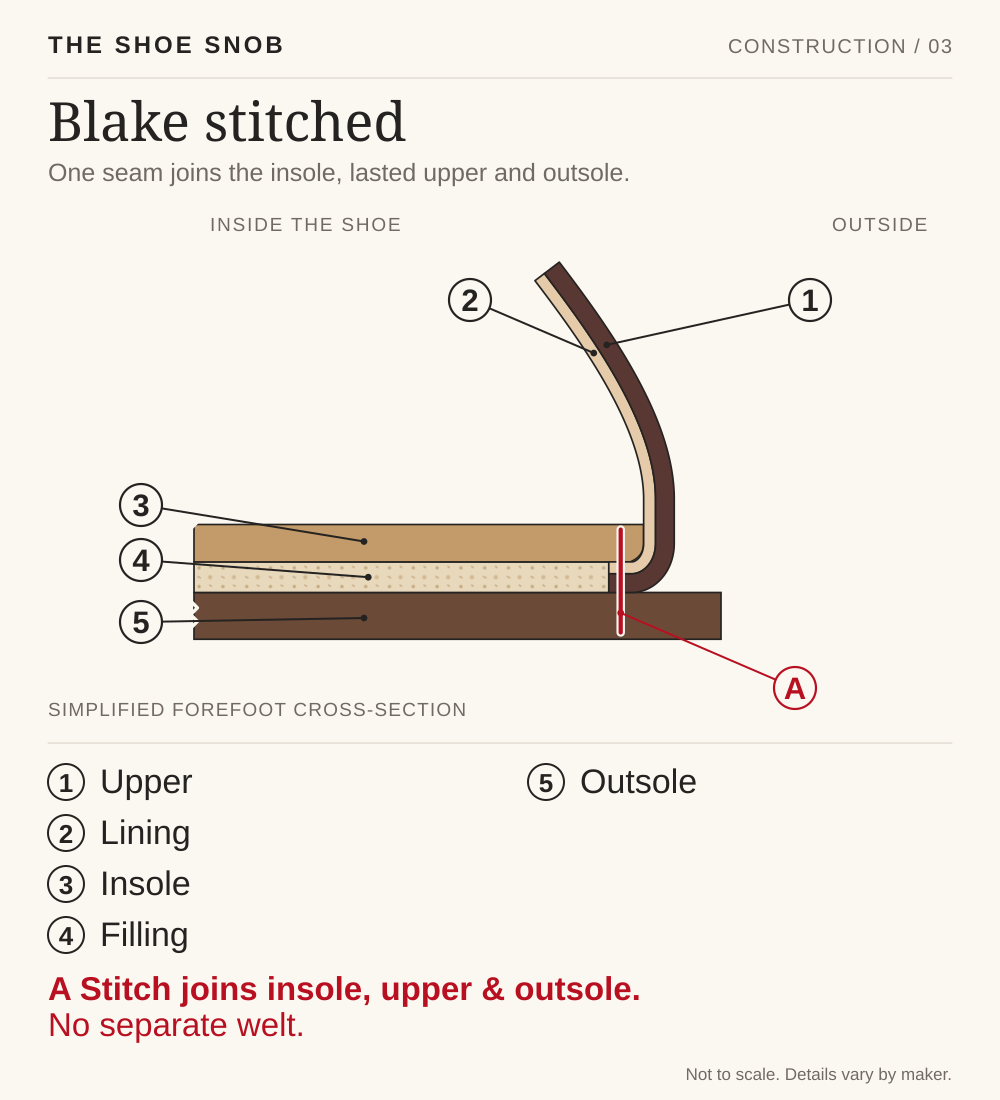
In Blake construction, a stitch runs through the outsole, the turned-in edge of the upper and the insole. There is no separate welt projecting around the shoe. That allows the maker to trim the sole edge close to the upper, which is one reason Blake is so common in elegant Italian footwear.
With fewer layers in the bottom, a Blake shoe can feel light and flexible. I particularly appreciate it when a slim silhouette is the aim. The sole thickness, lining and leather still matter, so the construction name alone will not tell you how soft a particular pair will feel.
That direct stitch also runs from the sole to the inside of the shoe. It is a potential route for moisture, making Blake less suited to prolonged wet conditions than a well-executed welted build.

Blake And Cemented Are Different
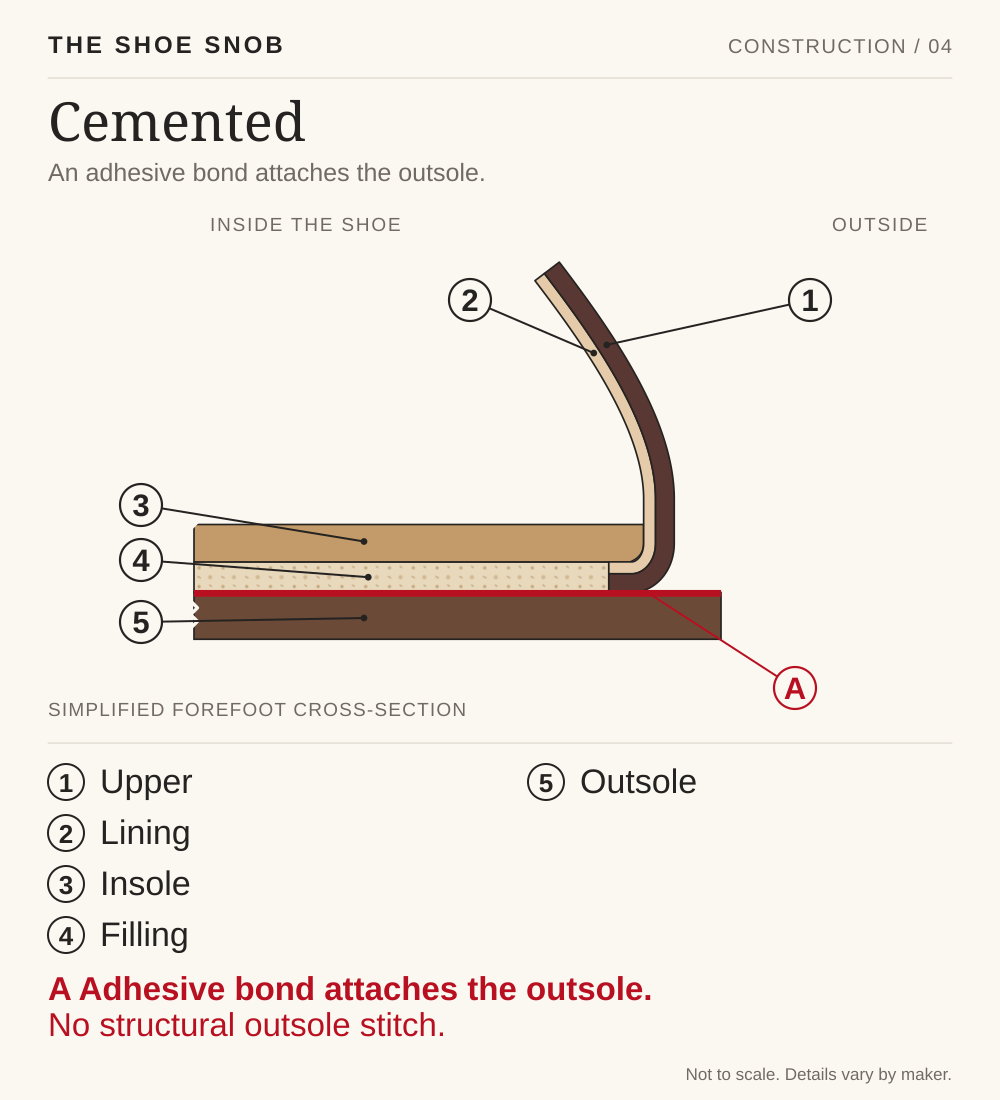
A slim sole edge does not tell you whether a shoe is stitched. In cemented construction, adhesive provides the bond between upper and outsole; there is no Blake seam running through the bottom.
Cementing can make sense for a soft, light shoe, but it does not offer the same stitched route to replacing the sole. Repair options depend on the materials and how the shoe was built. If you want a pair to be resoled, establish what the maker or repairer can actually do rather than judging by the sole edge alone.

Blake Shoes Can Be Resoled
Blake stitching does not make a shoe disposable. A repairer with the appropriate Blake equipment can replace the sole, provided the rest of the shoe is in suitable condition. The practical issue is finding that repairer, so check before buying if long-term servicing is important to you.
Blake Rapid is a different arrangement. Its Blake seam attaches the upper and insole to a midsole, with a second seam attaching the outsole to that midsole. The extra layer changes the profile and repair process; it should not be treated as ordinary Blake.
For the wider comparison, read my full guide to shoe construction on The Shoe Snob Blog.
