Collection: Lace-up Boots

From a clean service boot to a cap-toe Derby or lace-to-toe design, small changes in pattern make a big difference. Compare the upper, leather and sole below, then take a closer look at open and closed lacing.

Explore boot styles, leathers and lacing

48 products

Three ways to wear a lace-up boot

Lace-up describes the fastening, not one particular style. These three BLKBRD examples show how the pattern, leather and sole change the character of a boot.

Side view of the BLKBRD Rudiger in Natural Horween Chromexcel, showing its plain toe and service-boot profile

Service boot: a clean upper

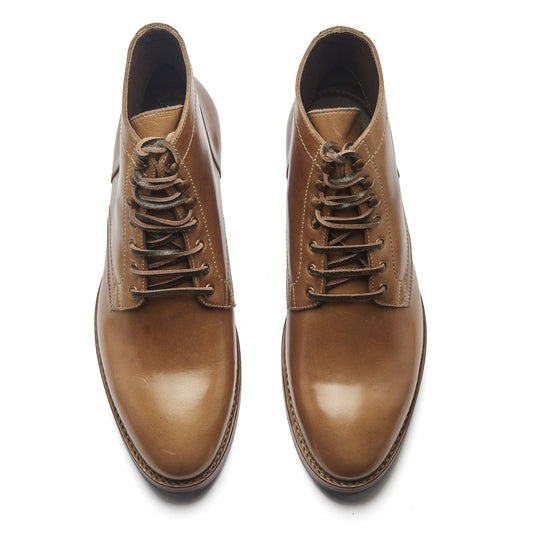
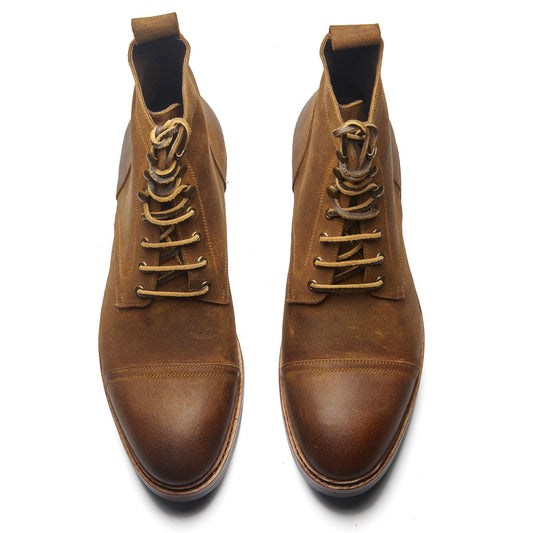
A plain-toe service boot keeps the detail to a minimum. The Natural Chromexcel Rudiger combines a round Royce-B last with stitchdown construction and a Vibram Eton sole. Its simple upper lets the leather and proportions lead, making it an easy starting point for denim, chinos and everyday casual wear.

Explore the Rudiger
Side view of the BLKBRD Dixon in Burgundy Hatch Grain, showing the toe-cap seam and textured leather

Cap-toe Derby: an extra seam

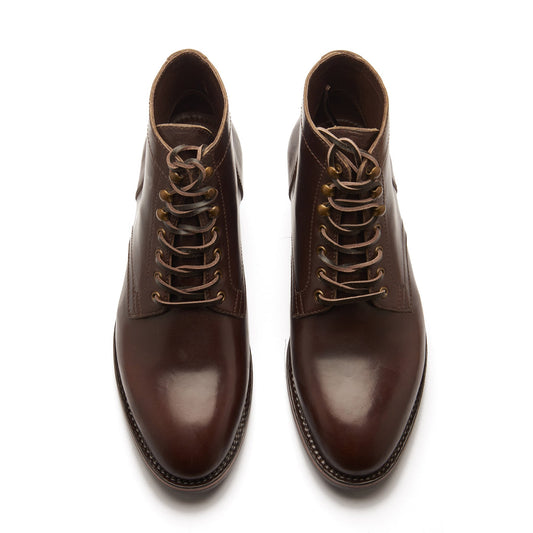
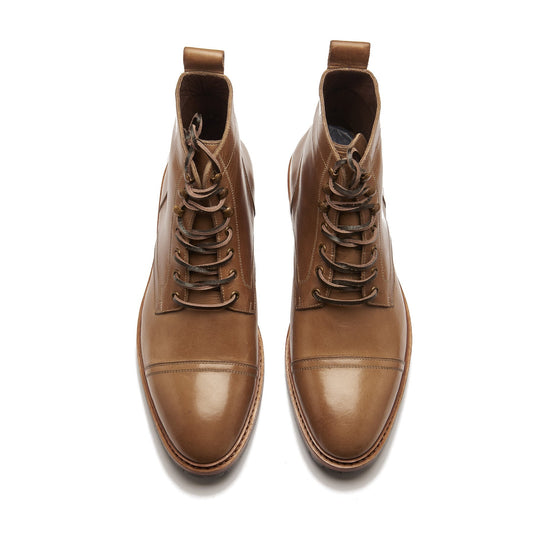
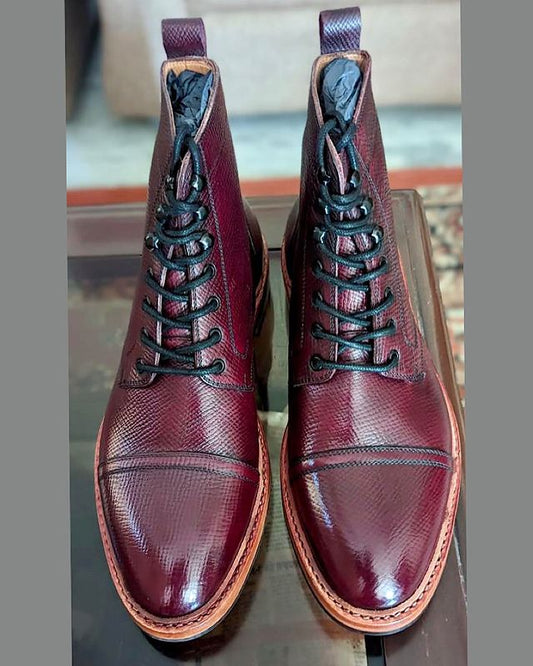
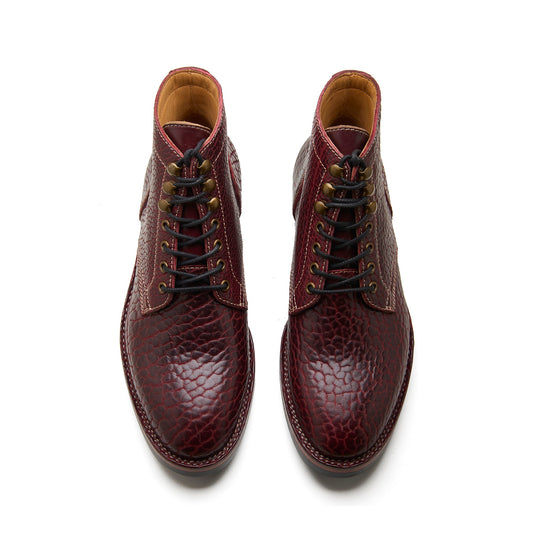
The Dixon adds a straight toe-cap seam to open Derby lacing. That seam changes the appearance; it does not make the boot an Oxford or a safety-toe boot. This Burgundy Hatch Grain version adds pronounced texture, hand-welted construction and a Vibram Fighter rubber sole to the familiar work-boot pattern.

Explore the Dixon
Side view of the BLKBRD Kodiak in Mole leather, showing extended lacing and its light-colored wedge sole

Lace-to-toe: adjustment farther forward

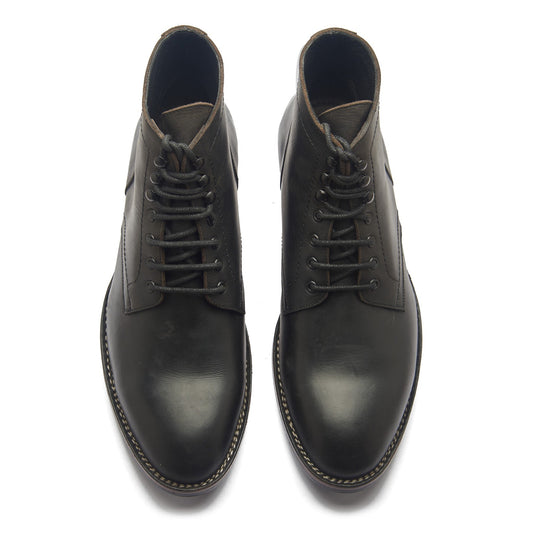
The Kodiak carries its lacing farther towards the toe, giving you more places to adjust the upper than a conventional service boot. The Mole version pairs thick leather with a Dr. Sole wedge sole and the work-round Humvee last. Its fuller proportions suit heavier denim and relaxed workwear.

Explore the Kodiak
Enzo Bonafè brown Scotchgrain Urban Commando boots with the Vibram Commando tread visible

The sole changes the whole boot

A lugged sole adds visual weight as well as a different tread. Enzo Bonafè’s Urban Commando combines brown Scotchgrain, a Vibram Commando sole and 360-degree chained Norvegese construction. Compare its deep tread with the lower-profile Eton sole on the Rudiger, or the continuous wedge beneath the Mole Kodiak.

Choose for the clothes and conditions you expect to wear it in. A substantial sole sits naturally beside heavier fabrics; a slimmer profile is easier beneath narrower trousers. Rubber, a storm welt or Norvegese stitching does not by itself make a boot waterproof.

See the Urban Commando sole Compare all boot styles

Oxford boots and Derby boots

The distinction is in the lacing. Both styles can have a plain toe, a toe cap or broguing; look at how the eyelet panels meet the front of the upper.

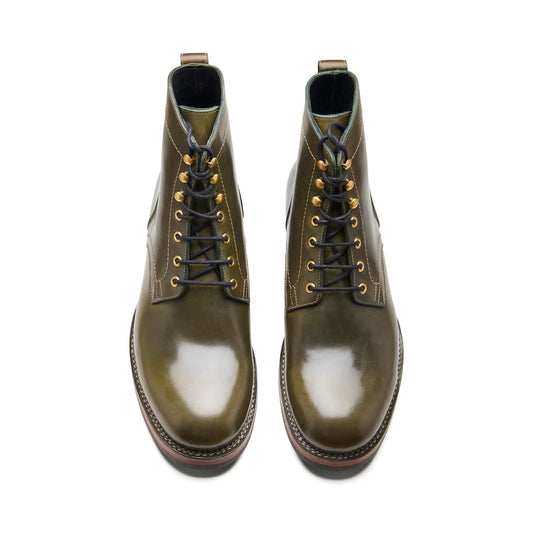
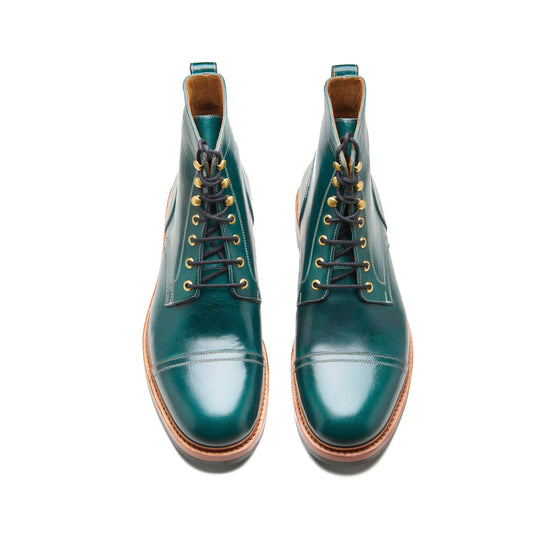
Top view of green J.FitzPatrick Oxford boots showing the closed facing at the bottom of the laces

Oxford boot: closed lacing

On an Oxford boot, the two eyelet panels meet at a fixed point at the bottom of the lacing. The green J.FitzPatrick boots show this closed facing clearly. Their textured shafts, marble patina and Commando soles also show that an Oxford boot can have plenty of character beyond a formal black dress style.

Shown: an individual pre-worn pair in US 7.5.

See the pre-worn J.FitzPatrick Oxford boots
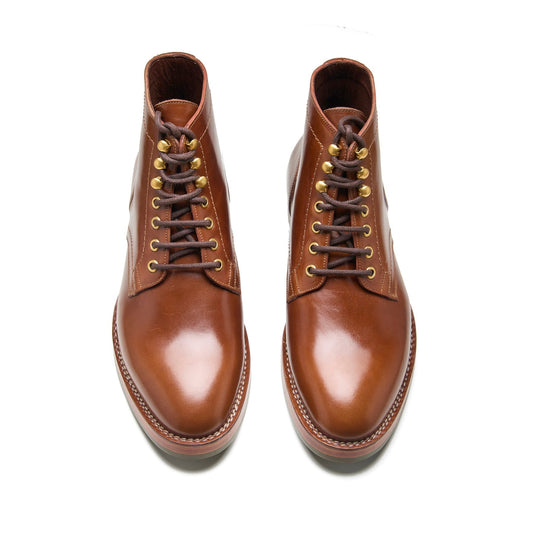
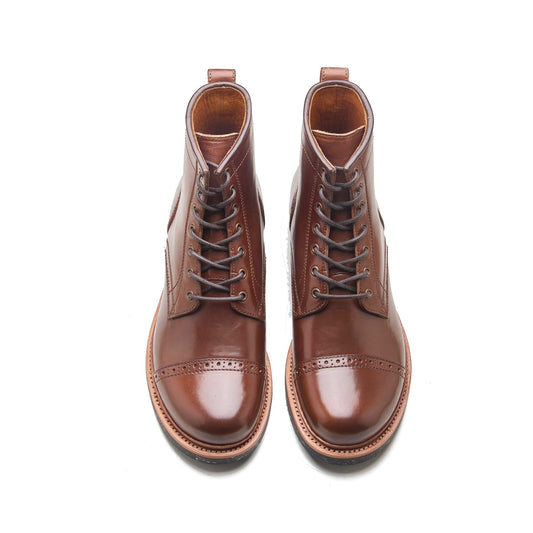
Top view of BLKBRD Rudiger service boots showing open Derby eyelet panels sitting over the vamp

Derby boot: open lacing

On a Derby boot, the eyelet panels sit over the vamp and open away from it. The Natural Chromexcel Rudiger shows this open arrangement within a service-boot pattern. Follow the edge of each panel down towards the toes to see the difference from the Oxford’s closed facing.

A service boot can therefore use Derby lacing; the two descriptions refer to different aspects of the boot.

See the Rudiger’s open lacing